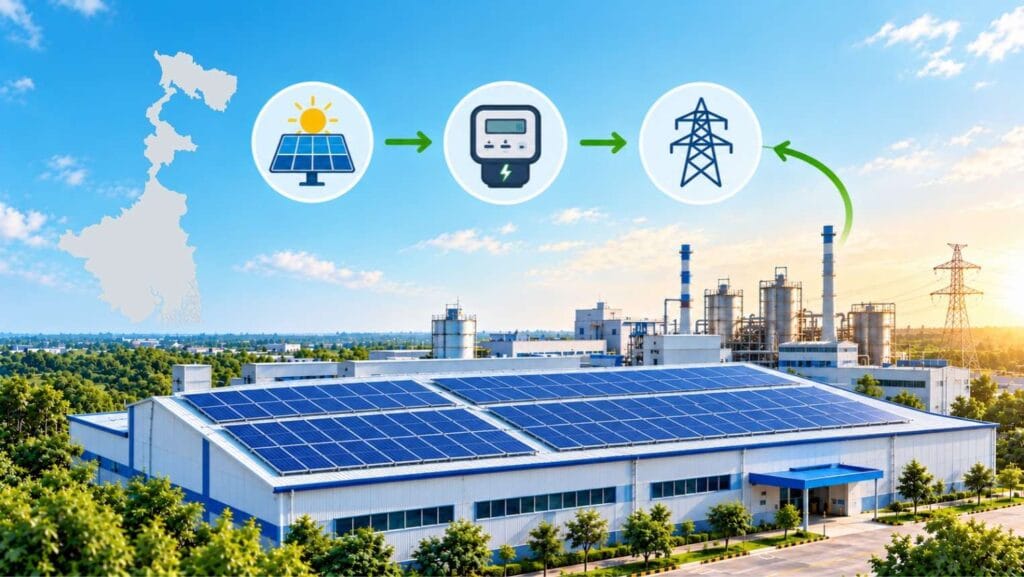
West Bengal Net Metering for Factories: 500 kW Guide
A factory can have a large rooftop, heavy daytime electricity consumption and a strong case for solar power… and still lose potential...
View More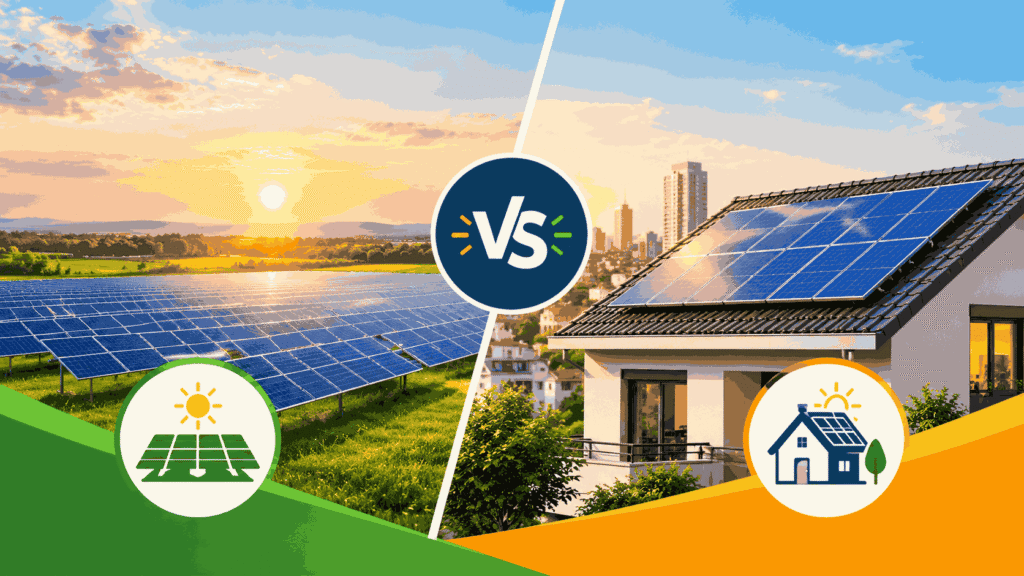
Open Access Solar vs Rooftop Solar: Complete Guide
Your factory is running two shifts daily, but your rooftop may not generate enough solar power to meet its energy demand. So,...
View More
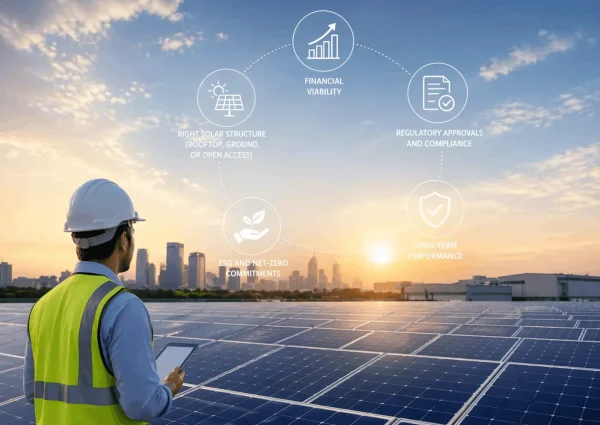
Commercial Solar for ESG and Net-Zero Goals
High electricity consumption is not just an energy cost issue. For many businesses, it is also part of the emissions conversion. This...
View More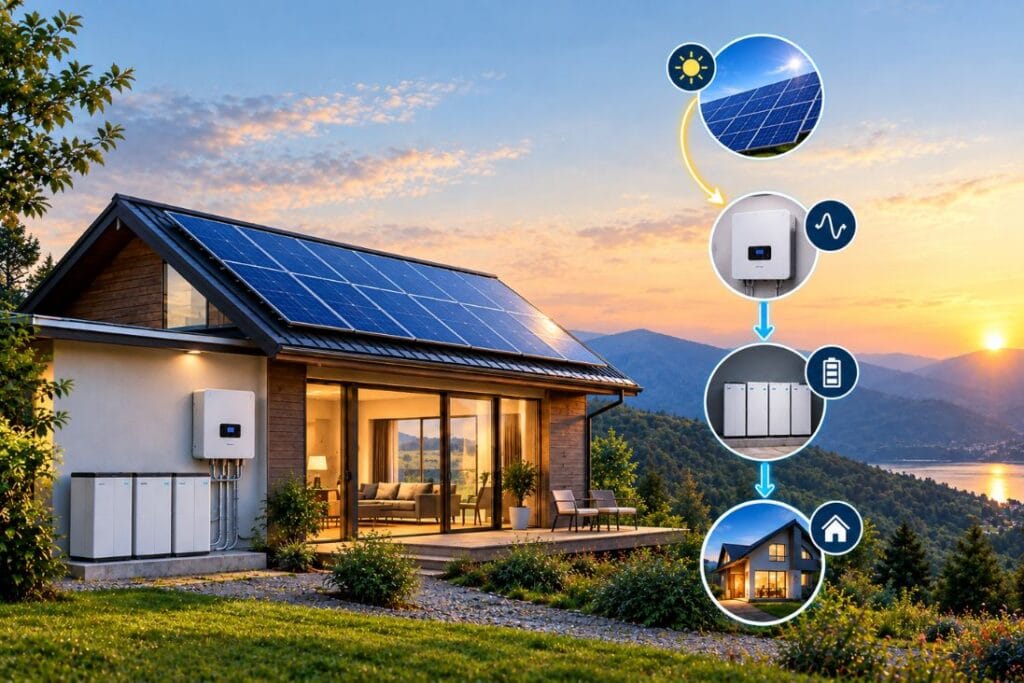
What Is an Off-Grid Solar System? Working, Batteries, Benefits & Cost
Is your home, farm or commercial facility built in a rural area? In this scenario, most of the nearest reliable power connection...
View More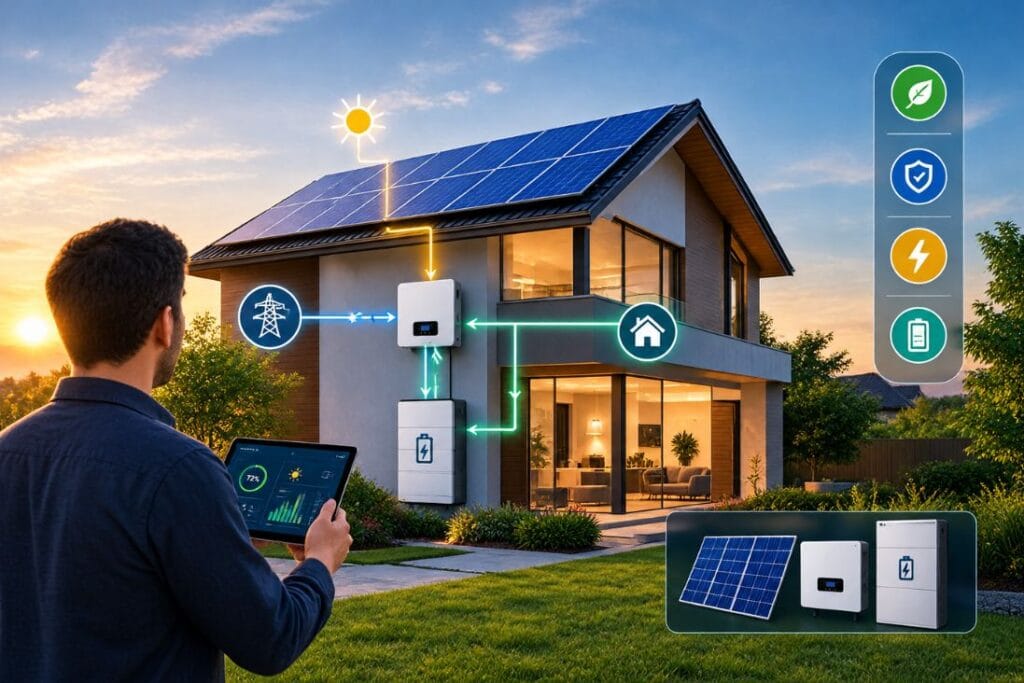
What Is a Hybrid Solar System? Benefits, Cost, Battery Backup & Working
If you grew up in India, you must understand the low voltage and flickering lights during peak hours. In that scenario, we...
View More
1 MW Solar Plant Cost & ROI 2026: C&I Investor Guide
The growing electricity demand and the government’s increasing focus on renewable energy are encouraging commercial and industrial facilities to invest in solar....
View More