Blogs
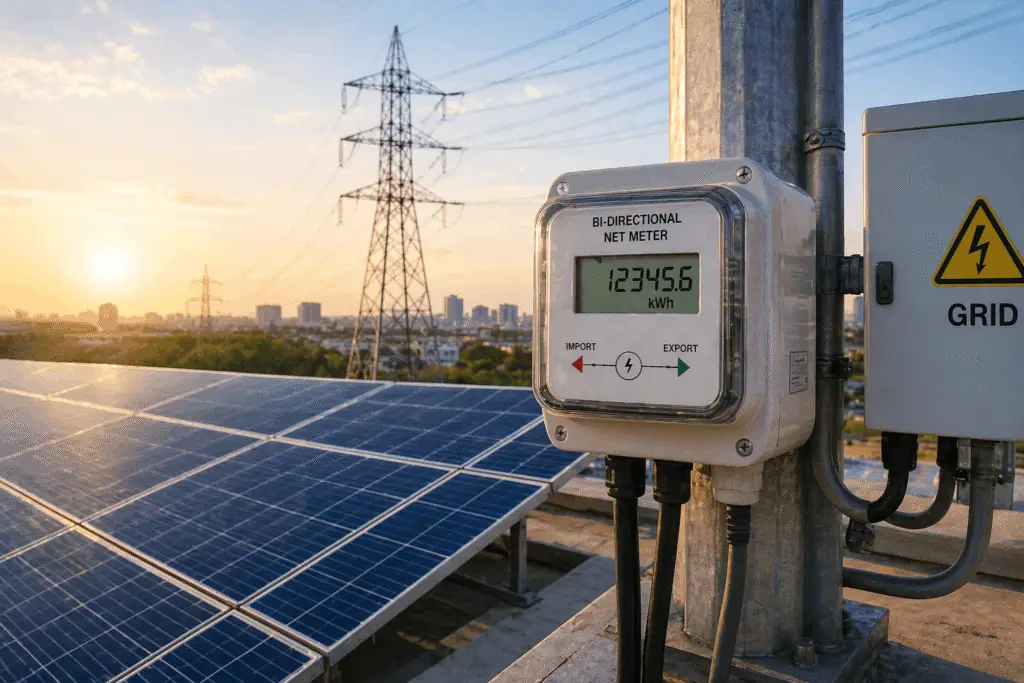
Understanding Net Metering in India: How Solar Systems Connect to the Grid
As solar energy adoption increases across India, many organisations exploring solar power come across the term net metering. It is one of...
View More
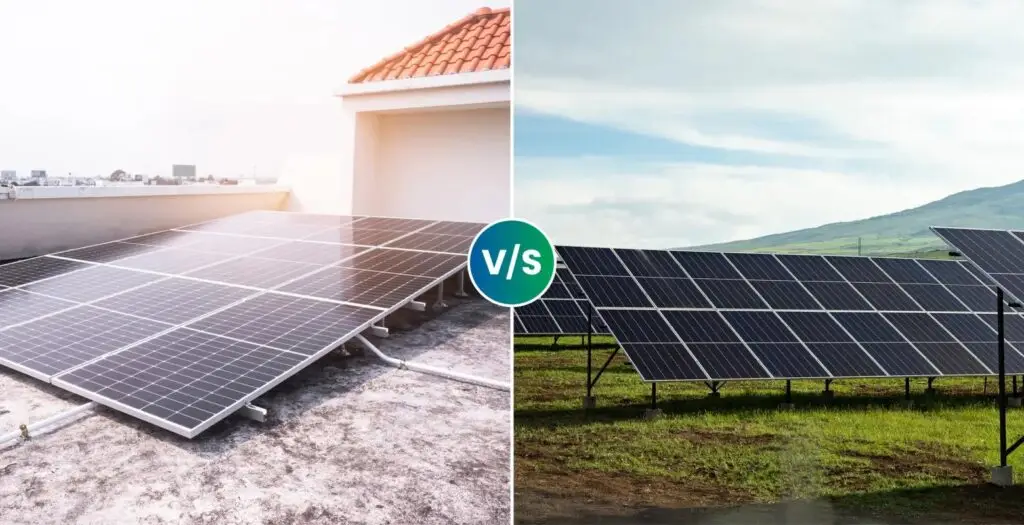
Rooftop Solar vs Ground-Mounted Solar: Key Differences Explained
Solar energy adoption is growing rapidly across businesses, institutions, and infrastructure projects in India. As organisations evaluate solar power as a long-term...
View More
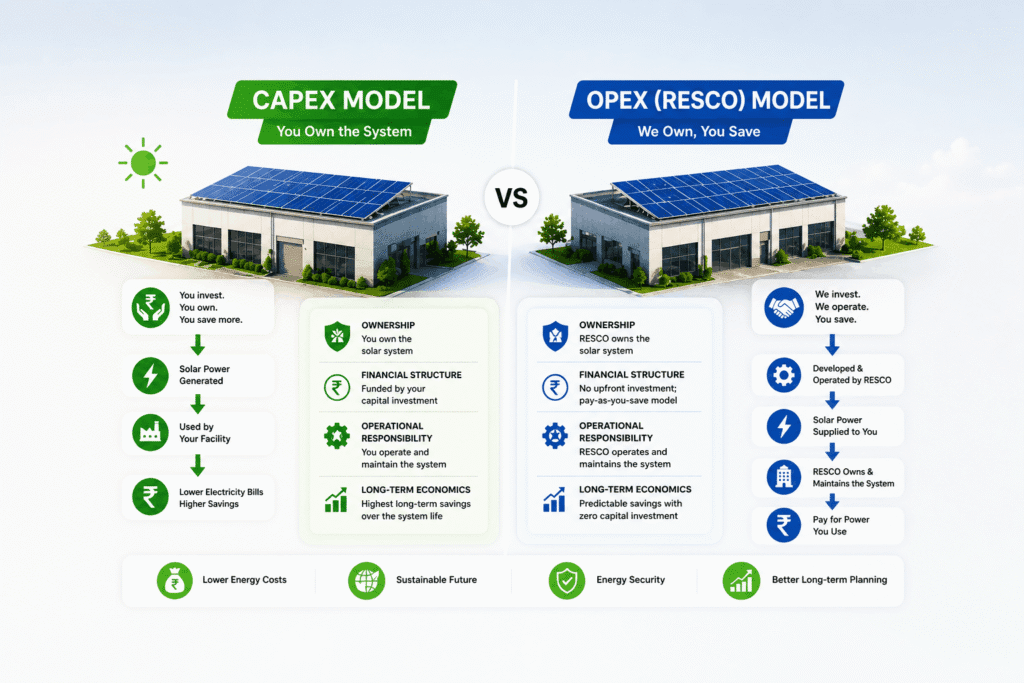
CAPEX vs OPEX Solar: Which Model Is Right for Your Organisation?
For organisations considering solar energy, one of the most important decisions is not only the system design or capacity but the commercial...
View More
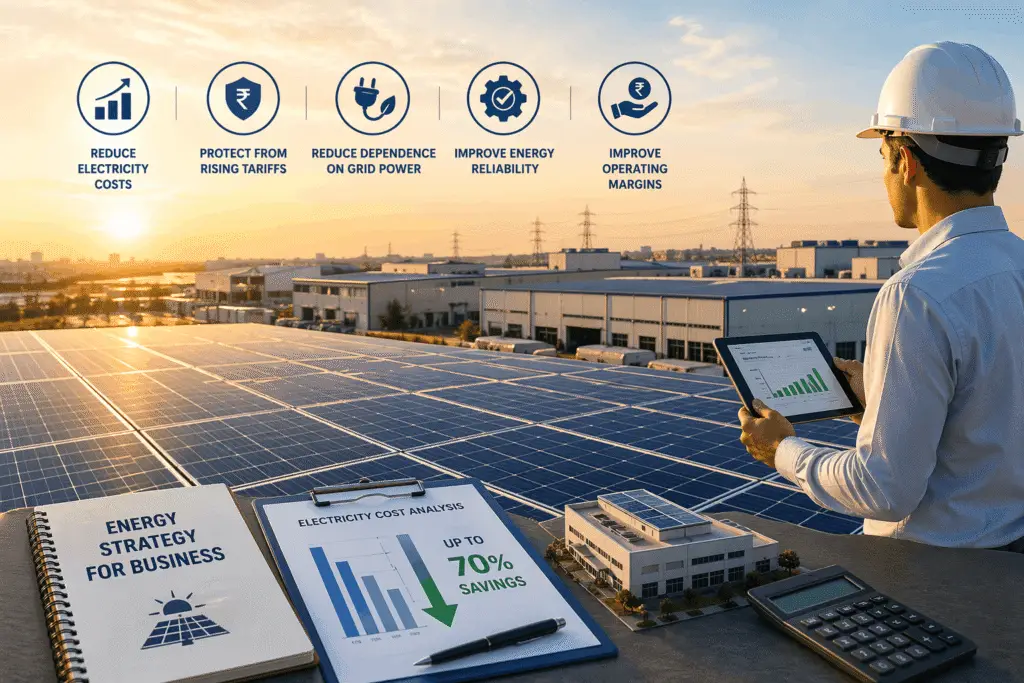
How Solar Power Helps Businesses Reduce Electricity Costs in India
Electricity has become one of the most significant operating costs for many businesses in India. Manufacturing facilities, commercial buildings, warehouses, institutions, and...
View MoreFrequently Asked Questions
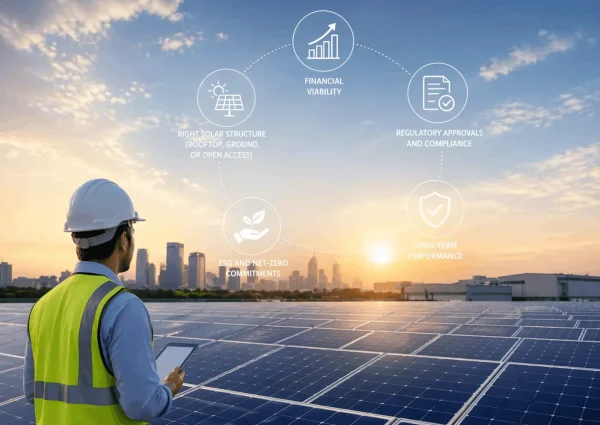
Viability depends on tariff structure, load profile, and regulatory environment — not just roof area. We conduct structured feasibility and financial modelling (CAPEX | OPEX | BOOT) before recommending deployment.
The optimal structure depends on space availability, consumption pattern, and regulatory framework. We evaluate technical, financial, and compliance factors before finalising the model.
Solar projects may require DISCOM coordination, net-metering approvals, CEIG inspections, and state-level documentation. We manage the statutory process end-to-end to ensure compliant execution.
Solar is a 25+ year asset. Correct system sizing, engineering discipline, quality components, and structured O&M determine lifecycle performance. We design and monitor accordingly.
Grid-connected solar reduces Scope-2 emissions and supports ESG and BRSR disclosures. Properly structured systems contribute to long-term decarbonisation aligned with India’s Net-Zero 2070 roadmap.
