
Solar Power for Hospitals & Clinics: Benefits, Cost & ROI
Hospitals & clinics never stop operating. From intensive care units and operation theaters to diagnostic labs and emergency units, every department depends...
View More
How to Pick the Right Solar EPC for Your Business
You finally decide to go solar. The number looks promising, and you have better control over operating costs. But months later, what...
View More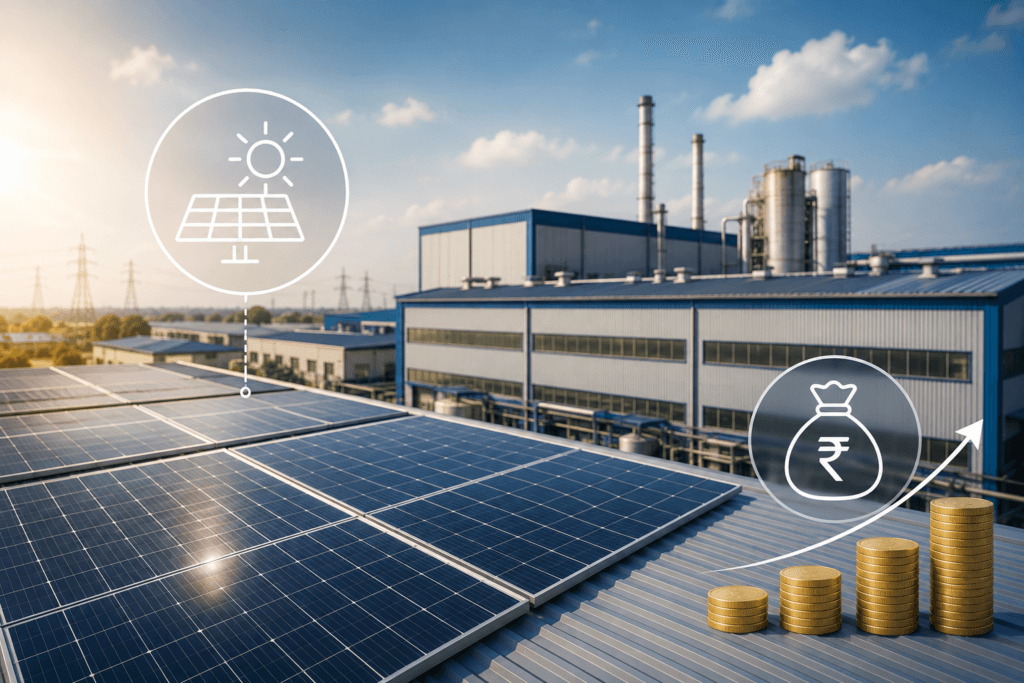
How Much Does Solar Installation Cost for Factories in India?
The electricity bill should not decide whether your factory has a profitable month, right? Yet that’s exactly what happens in many manufacturing...
View More
Why Commercial Solar Power Installation Is a Smart Investment for Businesses
Energy expenses are the fixed costs that never actually stay fixed. Every business owner knows the feeling when electricity bills arrive and...
View More
Key Factors to Consider Before Installing a Solar Power System
Solar energy has become one of the most practical ways for organisations to reduce electricity costs, improve energy reliability, and support sustainability...
View More
How Solar Energy Supports ESG Goals and Corporate Sustainability
Sustainability has become an increasingly important priority for organisations across industries. Businesses today are expected not only to deliver financial performance but...
View More