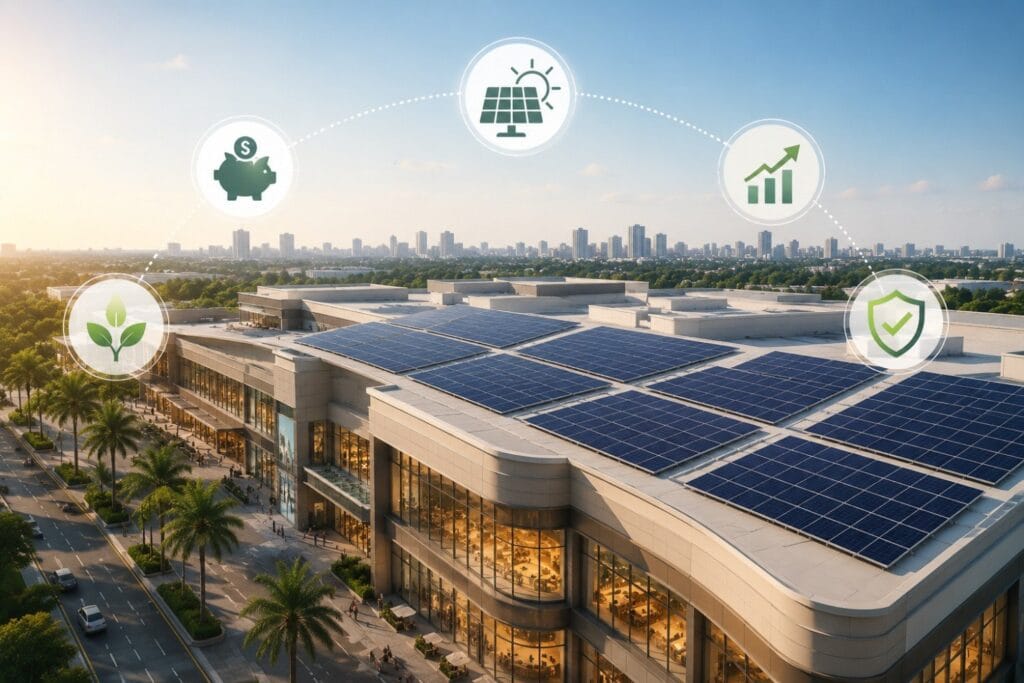
Hospitals & clinics never stop operating. From intensive care units and operation theaters to diagnostic labs and emergency units, every department depends on a continuous, reliable power supply.
At the same time, the rising electricity tariffs have made energy one of the largest recurring operational expenses for the healthcare industry.
However, where every second matters, power should never be a Question!
That’s exactly why solar power for hospitals & clinics is gaining momentum across India in 2026. Because it is more than just an environmentally responsible choice. Today, it is an opportunity to improve energy resilience & achieve predictable long-term savings.
Let’s dive in to find out how solar can reduce energy costs by 30% to 50% in the healthcare sector.
Why Hospitals Are Switching to Solar Power
The healthcare industry is one of the most energy-intensive sectors with a 24/7 electricity requirement for life-saving equipment, HVAC systems, elevators, laboratories, imaging devices, and IT infrastructure.
That’s why downtown is not acceptable for a second here.
Hospital solar power helps cover part of their electrical energy usage during the day while reducing the dependence on grid energy. Due to an increase in electricity charges in India, many hospitals have found that using solar energy is not only eco-friendly but also cost-effective.
This is due to reduced operating costs and improvements in solar energy technology.
What Are the Benefits of Solar Power for Hospitals
Here are the core benefits of installing commercial solar for hospitals, which make a significant difference:
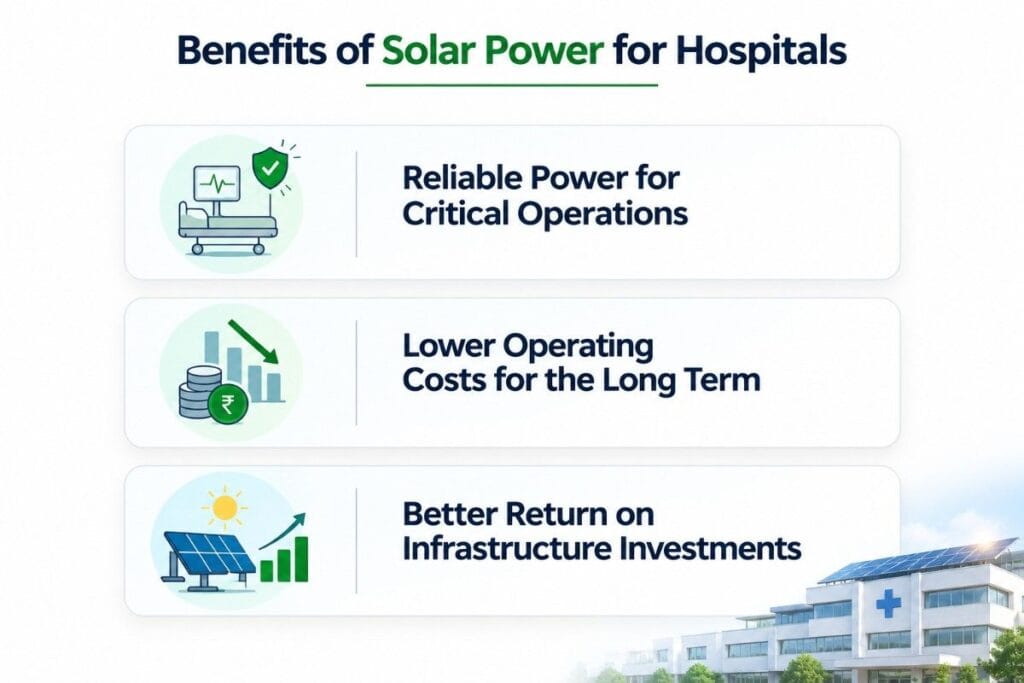
Reliable Power for Critical Operations
Solar by itself is not meant for use as emergency backups. But when coupled with battery energy storage or hybrid power systems, it adds another element of energy security. This becomes more valuable during grid outages, voltage fluctuations, peak demand periods, & remote healthcare facilities.
Lower Operating Costs for the Long Term
Unlike diesel generators, solar systems don’t require fuel. Once installed, you can expect 25+ years of energy reliability with relatively low maintenance costs. This makes installing solar panels for hospitals a budget-friendly option.
Better Return on Infrastructure Investments
While most capital investments tend to depreciate without creating any savings, a solar installation begins providing returns on its investment from the moment it is installed.
Each kilowatt-hour of power that is produced acts as a saving because it reduces the amount of electricity that has to be bought.
Types of Hospital Solar Power System
Rooftop Solar for Hospitals
Solar panels on hospital roofs are the most popular way of using alternative energy sources by hospitals that have unused roof space. The panels will produce clean energy during the day.
It is a great option for hospitals, nursing homes, diagnostic centers, and clinics with large unused rooftops that need to save money on electricity without acquiring any extra land.
Grid-Tied Solar System
This is the most common option for urban hospitals.
A grid-tied solar system supplies solar energy during the day while drawing additional power from the utility grid based on requirements. In fact, it can also export excess energy under applicable net-metering policies.
This option delivers the highest financial returns where grid reliability is good.
Hybrid Solar System
A hybrid solar system is a combination of photovoltaic solar panels and battery storage.
Hospitals that face frequent power interruptions normally favor such a system because it guarantees a constant flow of power while at the same time cutting down on electricity expenses.
Ground-Mounted Solar Plants
Large campus hospitals always prefer to go for a ground-mount system.
This solar system is capable of producing higher capacity as compared to rooftop systems and works perfectly well for medical colleges and institutions.
What Is Hospital Solar Installation Cost in India
Now you must be wondering how much a hospital solar installation costs in India?
But there is no straight answer to this question. Before you get confused with three different quotes from three different solar solution providers, let us help you understand factors influencing solar installation cost in India:
- Daily electricity consumption
- Available rooftop area
- Type of solar panels
- Inverter technology
- Battery storage requirements
- Structural modifications
- Local installation conditions
Keeping these things in mind, a general estimate stands:
Hospital Size | Recommended Solar Capacity |
Small Clinic | 10-30 kW |
Nursing Home | 30-75 kW |
Mid-Sized Hospital | 100-300 kW |
Large Multi-Specialty Hospital | 300 kW-1 MW+ |
Although the upfront investment can appear significant, government subsidies and accelerated depreciation (where applicable) can substantially improve project viability.
What ROI Can Hospitals Expect?
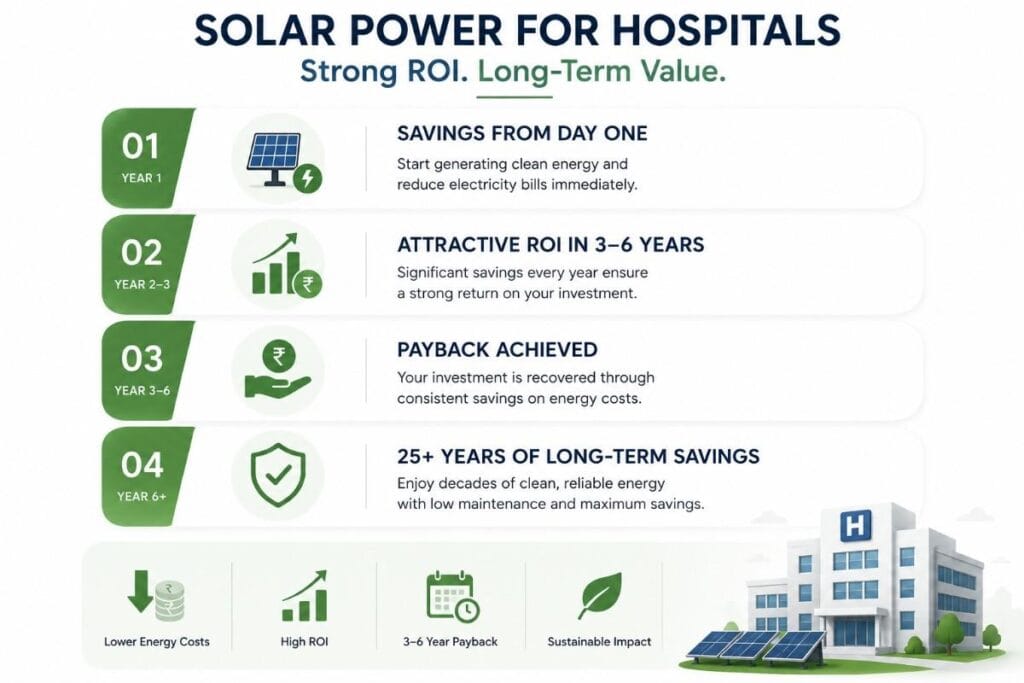
Solar energy is not an expense but an investment for most health care institutions.
Based on the electricity tariffs, system capacity, and energy usage pattern, most hospitals can easily recover their initial investment within 3 to 6 years.
By considering the quality of the solar system & expert installation process, you can expect the systems to operate for over 25 years. There may be at least 20 years of savings in electricity costs for hospitals.
The more energy usage during the day, the better the ROI.
Partner with an Experienced Commercial & Industrial Solar EPC
Every hospital & healthcare clinic has unique energy requirements. Only the right solar solution starts with understanding your electricity usage, rooftop potential & future expansion plans.
At SolarEssentials, we design & install customized solar power solutions for hospitals & healthcare facilities across India. From detailed energy assessments to installation, government subsidies, and long-term maintenance, our team ensures your solar transition is safe and financially rewarding.
Contact us today for a personalized solar assessment.
Frequently Asked Questions (FAQs)
Why should hospitals invest in solar power systems?
Hospitals should consider adopting solar power technology in order to cut down on energy costs, make sure that their energy use is reliable, and save on their budgets.
How much does a solar power system for a hospital cost in India?
The price of the solar power system for the hospital is affected by many things, including the size of the system, roof space, the quality of the components used, among other considerations. A professional site evaluation will help you to get the most appropriate system size.
What size solar plant is required for a hospital?
The optimal size of the solar power plant will vary with regard to the amount of energy consumed by the hospital per month and space available for installation. Small health clinics may need 10 to 30 kilowatts of solar power, whereas large hospitals may have 300 kilowatts to 1 megawatt or more.
How much can hospitals save on electricity bills with solar power?
Electricity costs at hospitals can be greatly reduced by creating power through their own systems that utilize renewable sources of energy. The savings will depend on the size of the energy plant, energy consumption levels and electricity prices. However, the cost of setting up such plants is quickly recouped in a matter of years.
Can hospitals operate critical medical equipment using solar energy?
Yes. A well-designed solar system, particularly with the help of battery storage or a hybrid system, is capable of supporting crucial medical processes in conjunction with the conventional grid as well as backup power sources.
What is the ROI of installing solar panels for hospitals?
Most hospitals recover their investment in 3 to 6 years, depending on how much electricity is consumed, the local charges, and the design of the system. Given that solar panels have an average lifespan of more than 25 years, hospitals will reap energy savings for many years after the payback period.
Are there government subsidies or tax benefits for hospital solar installations in India?
Government incentives, state-specific guidelines, and tax credits including accelerated depreciation, can apply to commercial hospitals based on regulations. The incentives differ depending on the state and type of project; therefore, it is important to seek out a qualified solar EPC company.
How long does it take to install a solar power system in a hospital?
The time taken for the installation depends on the complexity of the project. The majority of solar projects installed in hospitals range from four weeks up to twelve weeks.
What factors should hospitals consider before installing a solar power system?
A hospital must determine its power consumption, space on rooftops/land, structural capability, energy requirements in the future, cost, rules, and expertise of the solar EPC partner. A thorough energy audit guarantees maximum efficiency of the installation and rapid ROI.
Which type of solar system is best for hospitals: rooftop, ground-mounted, or hybrid?
What works best really depends on the infrastructure of the hospital and their power requirements. Solar panels mounted on rooftops work perfectly for those hospitals that have enough rooftop area, while ground-mounted systems work best for those that occupy a large amount of land area.