As solar energy adoption increases across India, many organisations exploring solar power come across the term net metering. It is one of the key regulatory mechanisms that enables solar systems to integrate with the electricity grid while improving the economics of solar installations.
For businesses and institutions considering solar power, understanding how net metering works is important because it directly affects how electricity generated by a solar system is utilised and accounted for.
Net metering allows organisations to consume the electricity generated by their solar plant while also exporting surplus energy to the grid when generation exceeds immediate consumption. This system creates a two-way interaction between the solar installation and the utility grid, helping maximise the value of solar energy production.
What Is Net Metering?
Net metering is a regulatory framework that allows electricity consumers who generate power through solar installations to feed excess electricity back into the grid.
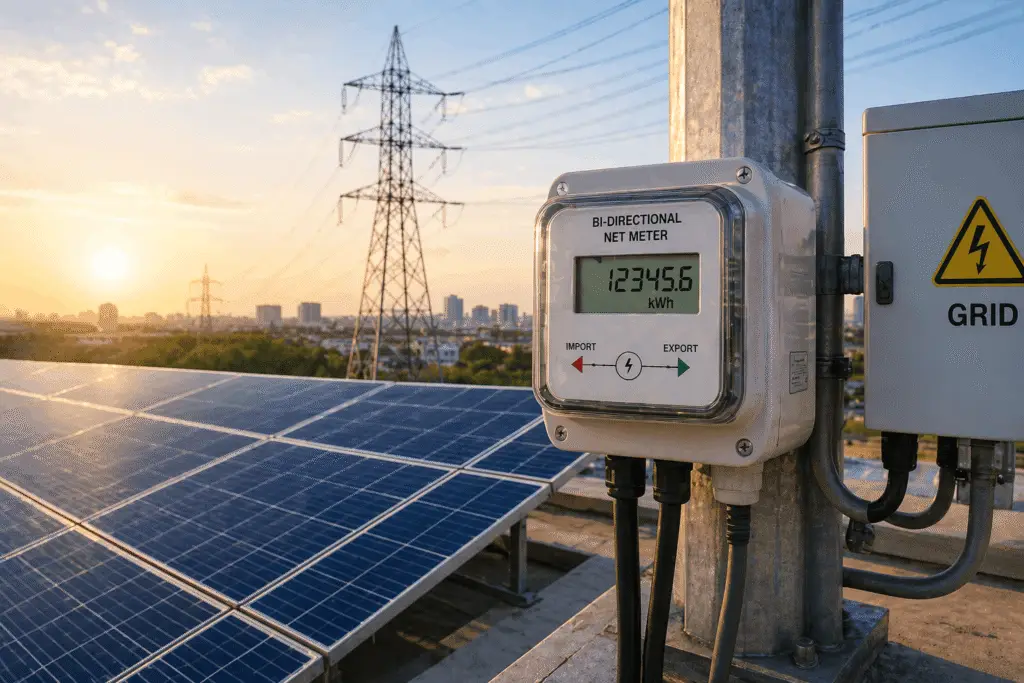
Under this mechanism, a bi-directional electricity meter is installed at the facility. This meter records both the electricity drawn from the grid and the electricity exported to the grid.
During daytime hours when solar generation is high, a facility may produce more electricity than it consumes. Instead of wasting that excess power, the surplus electricity is exported to the grid. The exported units are recorded and credited against the electricity drawn from the grid at other times.
At the end of the billing cycle, the electricity bill is calculated based on the net energy consumption, which is the difference between electricity imported from the grid and electricity exported to it.
Why Net Metering Is Important for Solar Projects
Net metering significantly improves the financial viability of solar installations. Without such a mechanism, excess electricity generated during periods of low consumption would go unused.
With net metering, organisations can make full use of the energy produced by their solar system even when generation and consumption patterns do not perfectly match.
For example, many facilities generate peak solar power during the middle of the day. If electricity consumption at that moment is lower than generation, the excess energy can be exported to the grid and later offset against electricity used during evening or night hours.
This ability to balance energy generation and consumption helps maximise the value of solar power installations.
How Net Metering Works in Practice
When a solar power system is installed in a grid-connected configuration, it is connected to the facility’s electrical system as well as to the local electricity distribution network.
During sunlight hours, the solar system generates electricity. This electricity is first used to meet the facility’s internal energy demand. If the solar generation exceeds the facility’s consumption at that time, the additional electricity flows back into the grid.
A bi-directional meter records two separate readings:
- Electricity imported from the grid
- Electricity exported to the grid
At the end of the billing period, the distribution utility calculates the net energy consumption by subtracting the exported units from the imported units.
If the solar system generates substantial electricity, the net consumption recorded on the bill may be significantly lower than the total electricity used by the facility.
Regulatory Framework for Net Metering in India
Net metering regulations in India are governed by state electricity regulatory commissions. Each state establishes its own rules regarding system capacity limits, eligibility criteria, and connection procedures.
While specific policies may vary between states, the overall objective remains the same: to encourage adoption of distributed renewable energy while ensuring grid stability.
Organisations planning solar installations must comply with the applicable regulatory guidelines of their state’s electricity distribution company (DISCOM). This typically includes submitting technical documentation, obtaining approvals, and completing grid connectivity procedures before the system can operate under net metering.
Because regulatory processes can vary and evolve over time, proper coordination with utilities is an important part of project implementation.
Key Considerations Before Implementing Net Metering
Before implementing a solar project under net metering, several technical and regulatory factors must be evaluated.
First, the size of the solar system should be aligned with the facility’s electricity consumption. Oversizing a system beyond permitted limits may lead to approval challenges or reduced financial efficiency.
Second, the electrical infrastructure of the facility must support safe integration with the grid. Proper system protection mechanisms, inverter configuration, and compliance with utility standards are essential.
Third, regulatory approvals must be obtained before commissioning the system. This includes submission of application forms, system drawings, and compliance documentation required by the utility.
These steps ensure that the solar installation operates safely and in accordance with grid regulations.
Benefits of Net Metering for Organisations
Net metering provides several advantages for organisations adopting solar power.
One of the most important benefits is improved utilisation of solar energy generation. Instead of losing excess electricity during low consumption periods, organisations can export power to the grid and receive credit for it.
Net metering also enhances the financial return of solar installations because it allows the system to offset a larger portion of electricity consumption over time.
In addition, grid-connected solar systems supported by net metering offer reliable integration with the existing electricity infrastructure, allowing facilities to continue drawing power from the grid when solar generation is lower.
This combination of solar generation and grid support creates a stable and flexible energy system.
The Role of Proper System Design
While net metering offers clear advantages, its effectiveness depends on proper system design and accurate energy analysis.
Solar installations must be sized correctly based on historical electricity consumption patterns, available installation space, and regulatory limits. Engineering design must also ensure safe electrical integration with the grid.
A well-designed solar system operating under net metering can significantly reduce electricity costs while maintaining grid reliability.
SolarEssentials supports organisations through the entire process, including feasibility analysis, system design, regulatory coordination, and project execution to ensure that solar installations operate smoothly within the applicable net metering framework.
Solar and the Future of Distributed Energy
Net metering has played a crucial role in accelerating solar adoption across India by making grid-connected solar systems more financially viable.
As businesses continue to focus on cost optimisation and sustainability, distributed solar generation is expected to become an increasingly important component of energy infrastructure.
When implemented with careful planning and disciplined execution, solar systems operating under net metering can provide reliable electricity generation and meaningful cost savings for decades.
For organisations evaluating solar energy, understanding how net metering works is an essential step toward making informed and confident energy decisions.