Electricity has become one of the most significant operating costs for many businesses in India. Manufacturing facilities, commercial buildings, warehouses, institutions, and infrastructure projects often rely heavily on grid electricity, where tariffs continue to increase over time.
For organisations looking to manage operational expenses more efficiently, solar energy has emerged as a practical and long-term solution. Solar power allows businesses to generate a portion of their own electricity, reduce dependence on grid supply, and create greater predictability in energy costs.
However, adopting solar is not simply about installing panels on a roof or open land. It is a strategic energy decision that requires careful technical evaluation, financial planning, and reliable execution.
Rising Electricity Costs and Business Impact
Grid electricity tariffs in India have steadily increased over the years due to rising fuel costs, infrastructure investments, and regulatory changes. For commercial and industrial consumers, electricity rates are often significantly higher than residential tariffs.
For businesses operating large facilities, electricity expenses can directly influence production costs, operating margins, and long-term planning. Unpredictable tariff increases can also make it difficult for organisations to maintain stable cost structures.
Solar power helps address this challenge by enabling businesses to generate electricity at a more predictable long-term cost.
How Solar Power Reduces Electricity Expenses
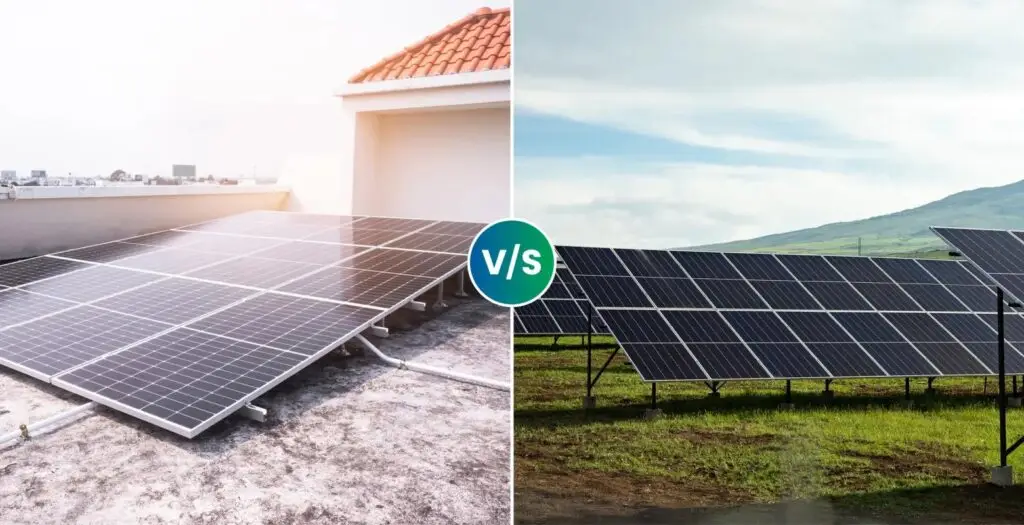
A solar power system generates electricity from sunlight using photovoltaic modules installed on rooftops, ground-mounted structures, or other suitable locations within the facility.
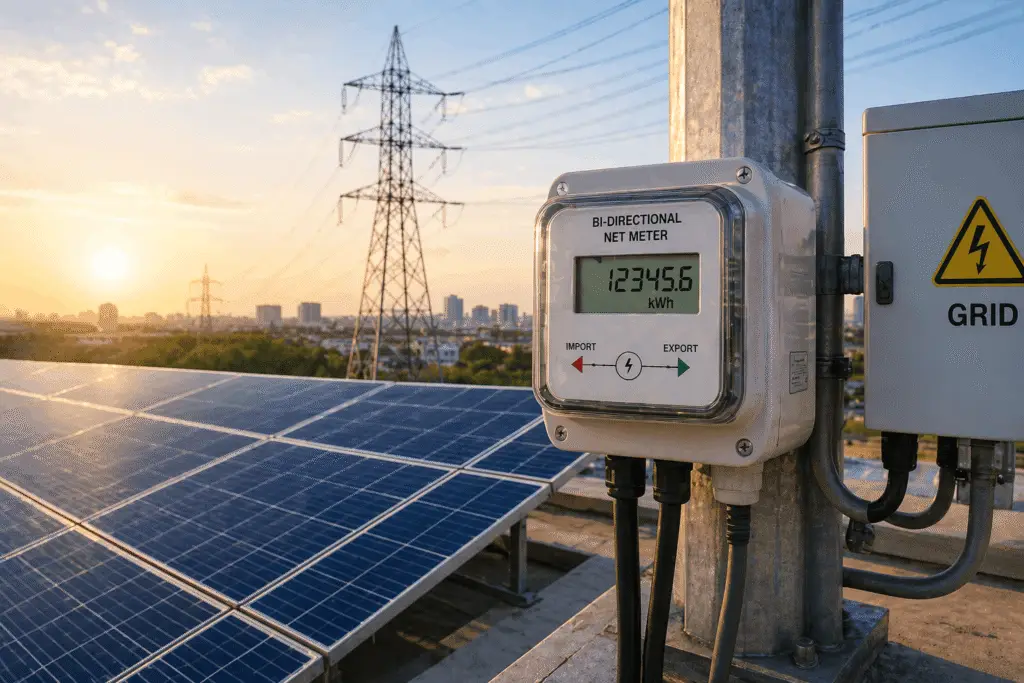
The electricity produced by the solar plant is consumed directly by the business. This reduces the amount of electricity that needs to be purchased from the grid.
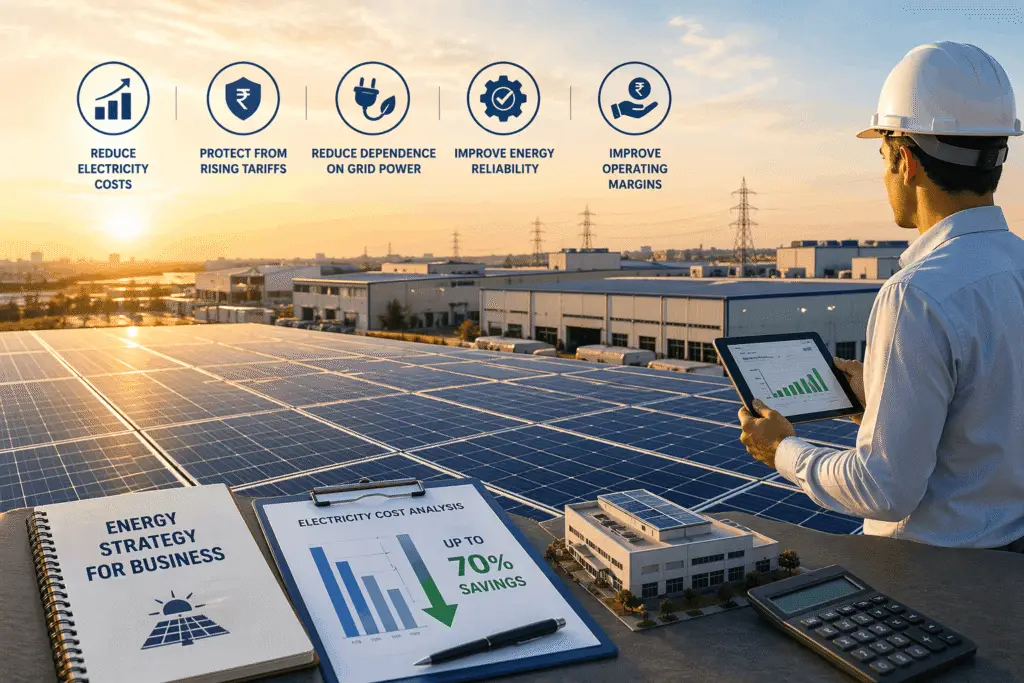
In many cases, businesses can reduce their electricity expenses by 40–70 percent, depending on system size, consumption patterns, and the commercial model adopted.
Over the operational life of the system — which typically exceeds 25 years — this reduction in grid dependence can result in significant cumulative savings.
Solar as Long-Term Energy Infrastructure
One of the most important aspects of solar adoption is recognising that a solar power system is a long-term energy asset. Unlike conventional equipment that may depreciate quickly, a well-designed solar installation continues generating electricity for decades.
This makes solar an infrastructure investment rather than a short-term purchase.
When implemented correctly, a solar system helps businesses stabilise electricity costs, improve energy resilience, and reduce exposure to future tariff increases.
At SolarEssentials, every project is approached from this infrastructure perspective. Systems are evaluated not only for immediate savings but also for long-term technical reliability and regulatory compliance.
Flexible Commercial Models for Businesses
Solar projects can be implemented through different commercial structures depending on the financial strategy of the organisation.
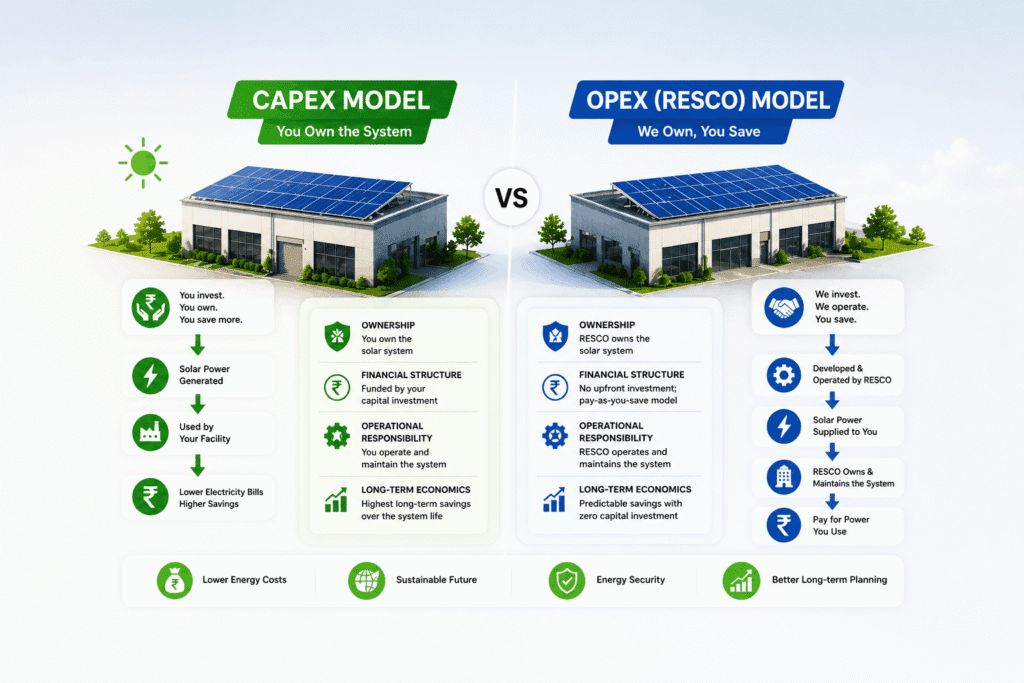
Under the CAPEX model, the business invests in the solar plant and owns the system outright, gaining the full benefit of the electricity generated.
Alternatively, the OPEX or RESCO model allows organisations to adopt solar without upfront capital investment, where electricity generated by the solar system is purchased through a long-term agreement at a lower tariff.
These models provide flexibility so that businesses can adopt solar energy in a way that aligns with their financial priorities.
Beyond Cost Savings: Additional Business Benefits
While electricity cost reduction is often the primary motivation for installing solar, the benefits extend beyond financial savings.
Solar power can also help businesses:
- Reduce dependence on grid electricity
- Improve long-term energy planning
- Lower Scope-2 carbon emissions
- Support corporate sustainability initiatives
- Strengthen ESG reporting and environmental responsibility
As energy management becomes an increasingly important aspect of corporate governance, solar energy offers both economic and environmental advantages.
The Importance of Proper System Design
Not all solar projects deliver the same results. System performance depends heavily on accurate feasibility assessment, correct system sizing, quality components, and disciplined execution.
Oversizing a system, ignoring structural conditions, or miscalculating energy consumption can reduce the effectiveness of the installation.
For this reason, solar projects must be evaluated carefully before implementation.
SolarEssentials follows a structured process that includes feasibility analysis, engineering design, regulatory coordination, and professional execution to ensure that each system performs reliably throughout its lifecycle.
Solar Energy and India’s Clean Energy Transition
India is rapidly expanding its renewable energy capacity as part of its broader clean energy strategy. The country’s commitment to achieving Net Zero emissions by 2070 and expanding non-fossil fuel power generation has accelerated the adoption of solar energy across industries.
Businesses that adopt solar power today are not only improving cost efficiency but also aligning with long-term sustainability goals and evolving regulatory expectations.
Moving Toward Smarter Energy Management
For many organisations, solar power represents the first step toward a more strategic approach to energy management. By generating electricity on-site, businesses gain greater control over how energy is produced, consumed, and managed.
When properly designed and implemented, solar systems provide stable energy generation, predictable cost structures, and long-term operational benefits.
Solar energy is no longer just an environmental initiative. It has become a practical and financially sound infrastructure decision for businesses across India.