Solar energy adoption is growing rapidly across businesses, institutions, and infrastructure projects in India. As organisations evaluate solar power as a long-term energy solution, one of the most common questions that arises during the early stages of planning is whether the project should be implemented as a rooftop solar system or a ground-mounted solar installation.
Both configurations generate electricity using photovoltaic technology, but they differ in terms of installation approach, project scale, site requirements, and system design considerations. Selecting the appropriate configuration depends on factors such as available space, energy demand, structural feasibility, and long-term operational planning.
Understanding the differences between rooftop and ground-mounted solar systems helps organisations make informed decisions about how to structure their solar energy projects.
What Is a Rooftop Solar System?
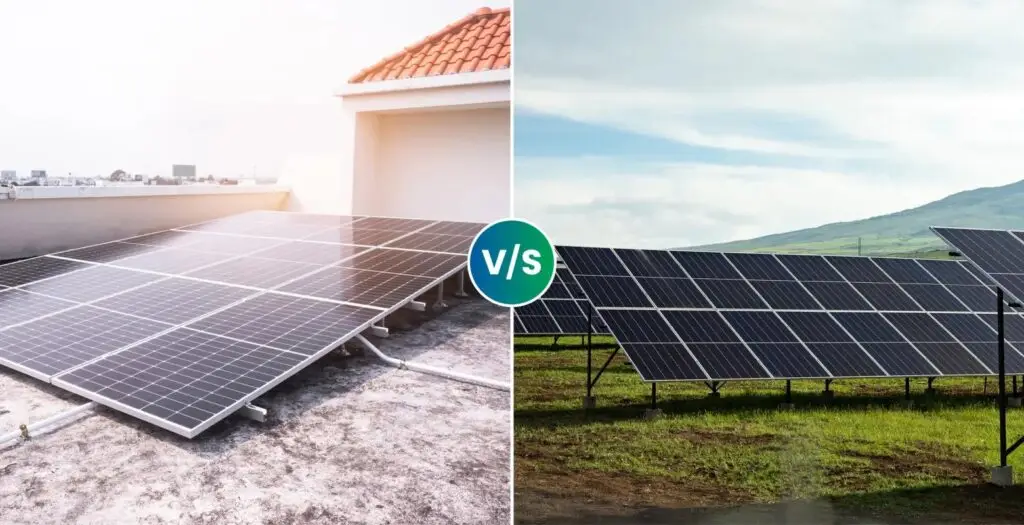
A rooftop solar system is installed on the roof of a building or structure. Solar modules are mounted on supporting structures fixed to the rooftop surface, allowing the system to generate electricity using otherwise unused roof space.
Rooftop solar installations are widely used across commercial buildings, industrial facilities, warehouses, institutional campuses, and infrastructure projects where roof area is available for solar deployment.
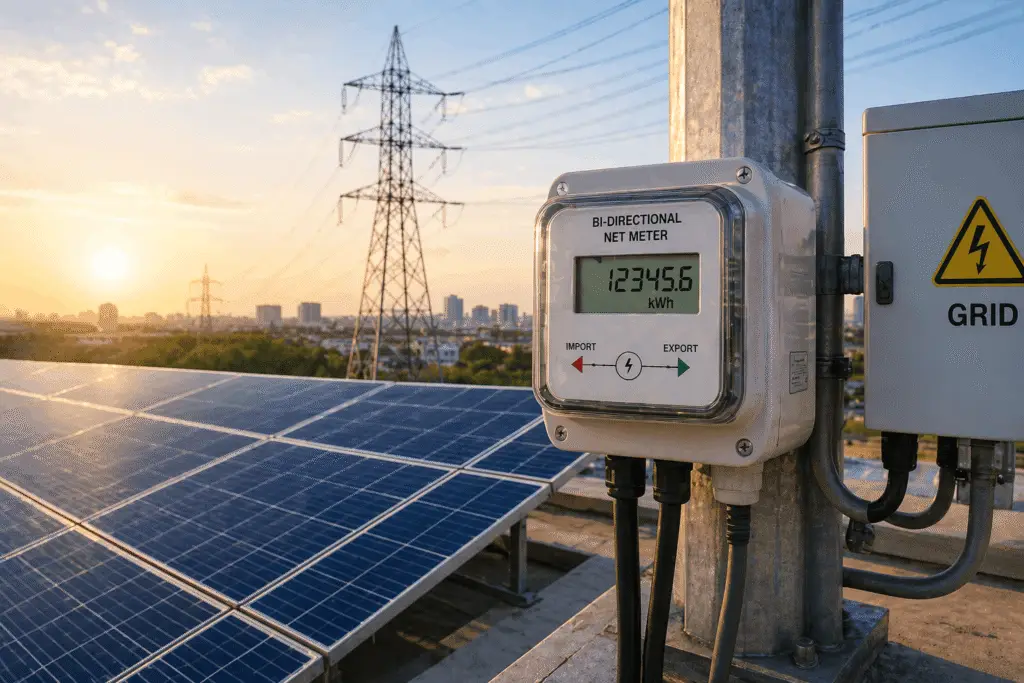
The electricity generated by the rooftop system is typically consumed directly by the facility, reducing the amount of electricity drawn from the grid. In grid-connected systems, excess power may also be exported depending on regulatory frameworks such as net metering.
Because rooftop installations utilise existing infrastructure, they are often an efficient way to integrate solar power into facilities without requiring additional land.
Advantages of Rooftop Solar
Rooftop solar systems offer several advantages for organisations that have suitable roof space available.
One of the primary benefits is efficient utilisation of existing infrastructure. Since the solar system is installed on the building roof, there is no need to allocate separate land for the installation.
Rooftop solar projects also enable organisations to generate electricity close to the point of consumption. This reduces transmission losses and improves overall energy efficiency.
Additionally, rooftop installations can often be implemented within the premises of the facility, simplifying project integration with the existing electrical infrastructure.
For many commercial and industrial buildings, rooftop solar represents the most practical way to begin transitioning toward renewable energy.
Considerations for Rooftop Installations
While rooftop solar offers several advantages, certain factors must be carefully evaluated before implementation.
Structural integrity of the building is a critical consideration. The roof must be capable of supporting the additional load of solar modules and mounting structures. Proper structural assessment is therefore essential before installation.
Roof orientation, shading conditions, and available installation area also influence the overall capacity and performance of the system. In some facilities, roof obstructions such as HVAC equipment, skylights, or structural elements may limit the available space for solar deployment.
For this reason, rooftop solar systems must be designed based on detailed site surveys and engineering evaluation.
What Is a Ground-Mounted Solar System?
Ground-mounted solar systems are installed on open land rather than on building structures. Solar modules are mounted on dedicated support structures fixed directly into the ground, creating a solar power plant that generates electricity at larger scales.
Ground-mounted systems are typically used when significant land area is available and when the energy demand of the facility or project requires higher generation capacity.
These installations are common for industrial facilities, infrastructure projects, solar parks, and captive power plants where land is available for solar development.
Because ground-mounted installations are not limited by rooftop space, they can often accommodate larger system capacities.
Advantages of Ground-Mounted Solar Systems
Ground-mounted solar plants offer greater flexibility in system design and layout. Since the installation takes place on open land, engineers can optimise the orientation and spacing of solar modules to maximise energy generation.
Maintenance access is often easier in ground-mounted systems, as technicians can move freely around the installation for inspections and servicing.
Ground-mounted solar plants also make it possible to develop larger-scale solar projects capable of supplying significant portions of an organisation’s electricity demand.
In cases where rooftop space is limited but energy consumption is high, ground-mounted systems may provide the required generation capacity.
Considerations for Ground-Mounted Installations
The primary requirement for ground-mounted solar systems is the availability of suitable land. The site must have sufficient open space and favourable solar exposure to support the installation.
Land preparation, civil works, and structural installation are typically more extensive compared to rooftop systems. These factors can influence project timelines and overall project planning.
Additionally, ground-mounted solar plants must be designed with careful attention to site conditions such as soil characteristics, drainage patterns, and environmental considerations.
Because these projects are often larger in scale, proper engineering design and regulatory coordination are essential.
Choosing the Right Solar Configuration
The choice between rooftop solar and ground-mounted solar depends on several project-specific factors.
Facilities with large rooftops and moderate energy consumption often benefit from rooftop solar installations. These systems allow organisations to utilise existing building infrastructure while reducing electricity costs.
On the other hand, projects with high electricity demand or limited rooftop space may find ground-mounted solar installations more suitable, especially when land is available within or near the facility.
In many cases, organisations adopt a hybrid approach, utilising rooftop solar for available building space while developing ground-mounted systems to meet additional energy requirements.
Importance of Engineering Evaluation
Regardless of the configuration chosen, solar projects should always begin with a detailed technical evaluation. Factors such as structural feasibility, electrical integration, regulatory approvals, and long-term performance expectations must be considered during the planning stage.
SolarEssentials follows a structured evaluation process that includes site survey, energy analysis, and engineering design to determine the most appropriate solar configuration for each project.
The objective is not simply to install solar panels, but to ensure that the chosen system delivers reliable performance and long-term operational value.
Solar Infrastructure for the Long Term
Both rooftop and ground-mounted solar systems play an important role in helping organisations transition toward cleaner and more efficient energy sources.
When designed and executed properly, solar installations provide stable electricity generation for decades while reducing dependence on conventional grid power.
For organisations seeking greater control over energy costs and sustainability outcomes, solar power has become an increasingly practical infrastructure investment.
The key lies in selecting the right configuration and ensuring that the system is engineered, implemented, and maintained with long-term performance in mind.